Float Boston

Beginners & Ongoing guide to

Floating

Here you’ll find our beginners and ongoing guide to floating. From what to bring, to how you’ll feel how often you should float and even my favorite subject…Science! We’ve also peppered in actual reviews so you can see what people just like you think of the float experience. Click here to see all of our reviews.

This was such a cool experience and Kristie was amazing!! It was my first float and she explained everything perfectly and allowed me to ask questions until I was comfortable with the whole process. It felt so luxurious!

Marissa
First Float Review 12.2025

Why We Float

We live in a world that never shuts up. Notifications, screens, noise, deadlines, and constant input keep our nervous systems in a permanent state of “on.” Floating offers something increasingly rare: a place where your phone is off, the outside world disappears, and your body is finally allowed to rest without interruption.

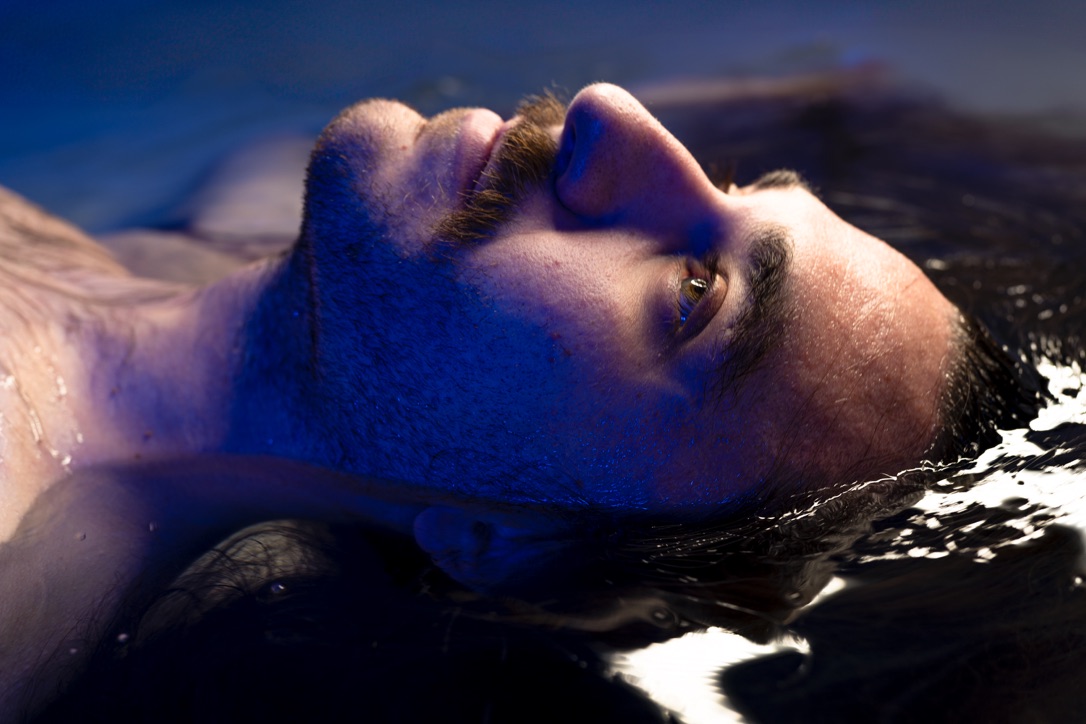
Inside the tank, there are no screens, no pings, and nothing demanding your attention. The warm, mineral-rich water supports your body completely, while the quiet and darkness give your brain a break from nonstop stimulation. This environment helps shift your nervous system out of fight-or-flight and into a deeply restorative state where stress hormones drop and mental noise softens. Some people experience deep relaxation, others clarity, emotional release, or simply the relief of not being reachable for a while. There’s no right way to float — just space to unplug, reset, and remember what calm actually feels like.

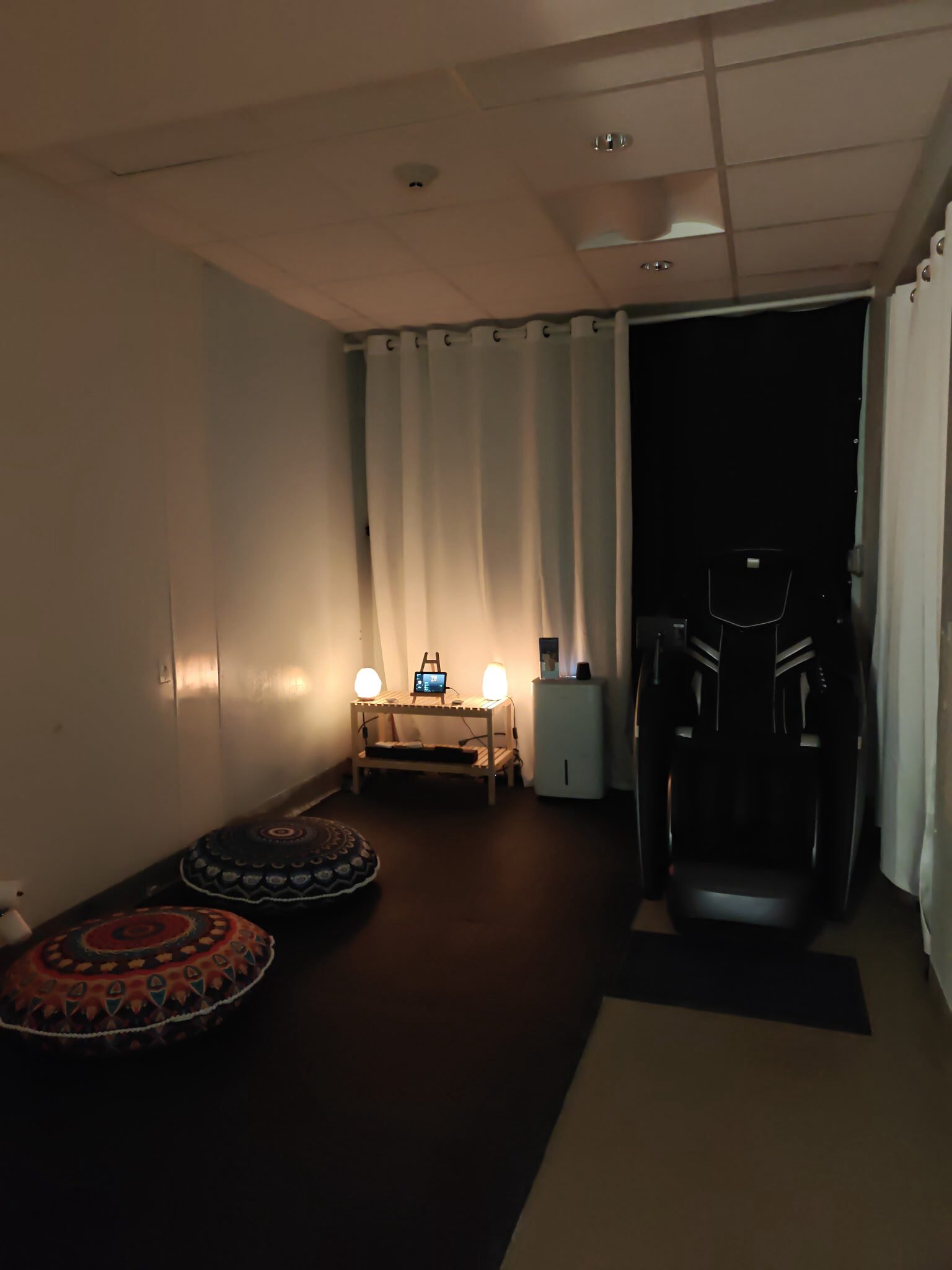
On your first float there’s no need to bring anything, Float Boston has you covered. We have soap and shampoo, towels, leave in conditioner, brushes, hair dryers and even post float tea and coffee. And don’t forget the Haven where we have our luxury massage chair, meditation pillows, stretching mats and what could be the most relaxing atmosphere in any float center, anywhere.

As your community float center our goal is to make your float a relaxing, stress free experience.  

Really relaxing experience in the float tank! Everything was clean and thoughtfully arranged which made for a great first time experience

Kelsey
First Float Review 12.2025

Pre-Float

A little preparation goes a long way, but don’t overthink it. Floating isn’t something you need to “train” for — just a few simple choices beforehand can help you settle in faster and get more out of the experience.

If possible, try to avoid caffeine for a few hours before your float, as stimulants can make it harder to fully relax. We also recommend waiting a few days after coloring your hair, since fresh dye can react with the salt. Please plan to arrive about 10 minutes early so we can give you a quick walk-through, answer any questions, and make sure you feel completely comfortable before heading in. We provide everything you’ll need — towels, earplugs, soap, shampoo, conditioner, lotion, and hair dryers — so you can show up as you are and leave feeling reset.

Your room is private so there’s no need for a bathing suit. If you wear contacts we have cases and solution. 

Outside the tank, you’ll find a float tote with your essentials: makeup remover, earplugs, ointment for small cuts or scrapes, a bottle of water, and one of our ever-rotating rubber ducks (yes, it’s yours to keep). Once you’re ready, step into the tank and settle in.

Float is amazing! This was my first time in since it reopened, and Kristie gave me a full tour. The cryo is so cool (literally!), especially the anxiety and vagus nerve stimulation, and they even have a vibration plate and massage chair for after the treatments. I'll have to come back to try a full float in the new year!

Tony
Float Review 12.2025
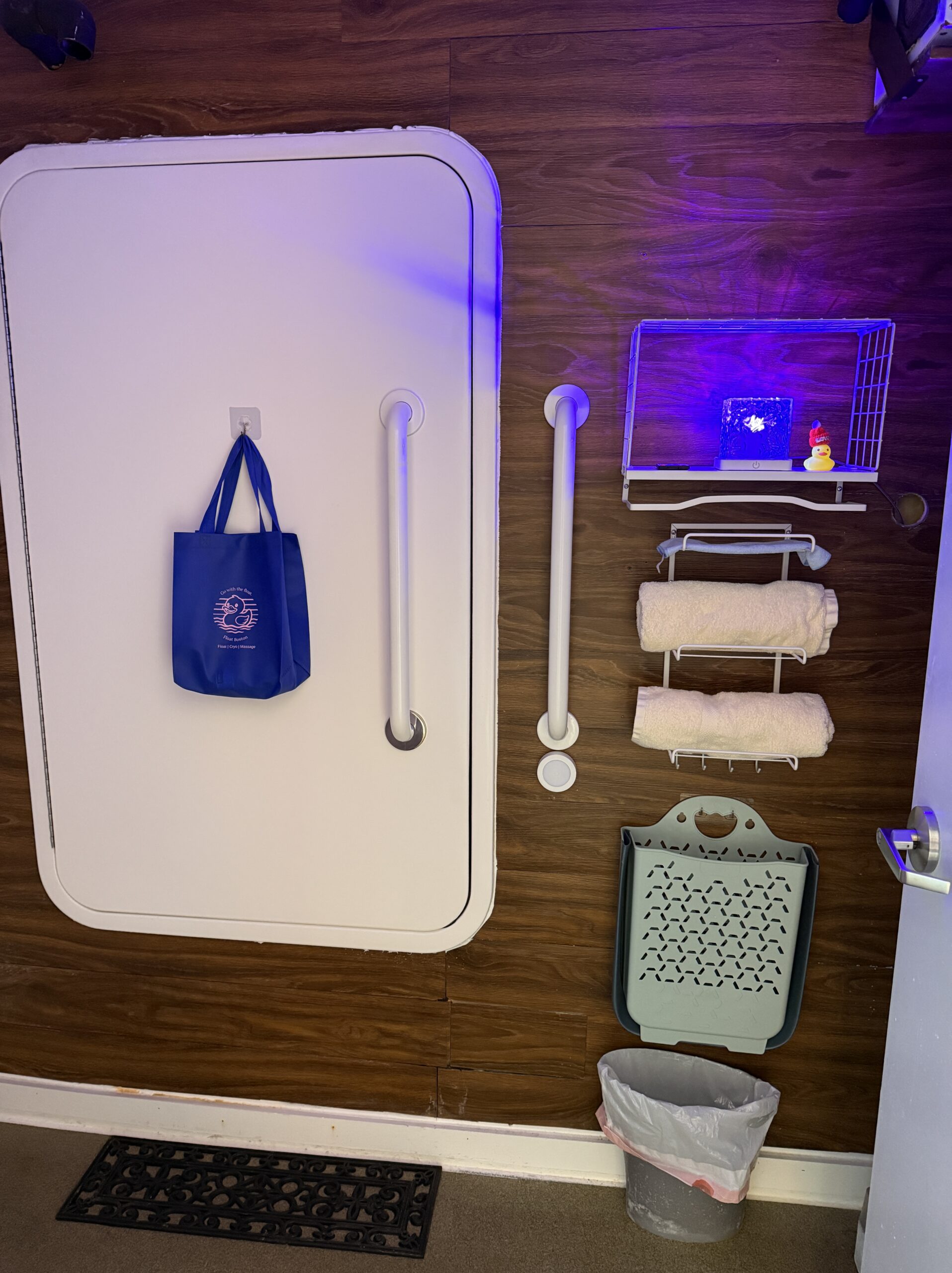
If you feel the urge to itch your face, use the spray bottle first to rinse salt from your hands — salt in the eyes is no fun. Many first-time floaters also instinctively keep their arms at their sides, but that can strain your neck. Most people feel more comfortable resting their arms above or behind their head. We also have optional neck float assists if you feel cramped.

The hardest part for many beginners is turning the mind off — and that’s completely normal. Some people relax right away, while others spend much of their first float simply unwinding. There’s no rush and nothing to “fix.” The more you float, the easier it becomes. If you’d like meditation music, just let us know before your session, the link below has our selection. About two minutes before your float ends, you’ll hear a gentle alarm letting you know it’s time to exit. When the water begins to move and the filtration turns on, that’s your cue to step out and enjoy a final 10-minute shower. Leave your towels in the room, take a deep breath, and ease back into the world.

When your float ends, take your time getting out of the tank and enjoy a final shower. You can leave all towels right in the room — we’ll take care of the rest. As you re-enter the outside world, many people notice their body feels lighter, looser, or deeply relaxed, while their mind may feel unusually quiet or clear. Some people feel energized, others sleepy, and many experience a calm, grounded state that’s hard to put into words. Later that day — or even that night — it’s common to notice deeper sleep, more vivid dreams, or a lingering sense of ease that carries into the next day. Over time, regular floating can help train your nervous system to access this relaxed state more easily, even outside the tank.

There’s no need to rush out when your float is over. We encourage you to move slowly and let the experience settle. We offer free reflection cards where you can jot down anything you noticed, felt, or realized during your float — many people are surprised by what comes up when they pause. You’re also welcome to enjoy complimentary post-float coffee or tea, spend time in The Haven for quiet meditation, or unwind in our luxury massage chair. Floating doesn’t end when you leave the tank — giving yourself a few extra minutes afterward helps the benefits last even longer.

Superdelux wonderful for this newbie floater!
Do it!
Mary
First Float Review 1.2026

While a single float can feel deeply relaxing, the most meaningful benefits tend to show up with consistency. Floating works by giving your nervous system a repeated opportunity to fully downshift — something most of us rarely experience in daily life. Over time, this helps your body learn how to exit chronic stress more easily, not just in the tank, but outside of it as well. Many regular floaters report improved sleep quality, reduced baseline anxiety, better stress resilience, and a greater sense of emotional balance as floating becomes part of their routine.

Research supports what long-term floaters experience firsthand. Studies on flotation-REST (Restricted Environmental Stimulation Therapy) have shown reductions in cortisol (the body’s primary stress hormone), improvements in sleep, decreases in anxiety and depression symptoms, and enhanced relaxation and mood regulation. Regular sessions have also been linked to relief from chronic pain, muscle tension, and stress-related fatigue. Perhaps most importantly, repeated floats appear to help regulate the autonomic nervous system — strengthening the body’s ability to shift out of fight-or-flight and into rest-and-repair. Floating doesn’t just offer an escape from overstimulation; practiced regularly, it helps retrain your system to handle the world with more calm, clarity, and ease.

More reading for those that can't get enough.

How often should I float?

There’s no single “right” schedule, but consistency matters more than intensity. Many people find that floating once a week helps keep stress, sleep issues, and mental overload from building up in the first place. Others float biweekly or monthly as a reset point, especially during high-stress seasons. Even occasional floating can be beneficial, but regular sessions tend to create more noticeable, longer-lasting changes in how the body responds to stress.

If you’re using floating for something specific — like chronic stress, anxiety, poor sleep, or muscle tension — starting with a more frequent rhythm can help your nervous system learn the pattern faster. As your system adapts, many people naturally settle into a maintenance schedule that feels sustainable and supportive rather than reactive.

Why Consistency Matters More Than Duration
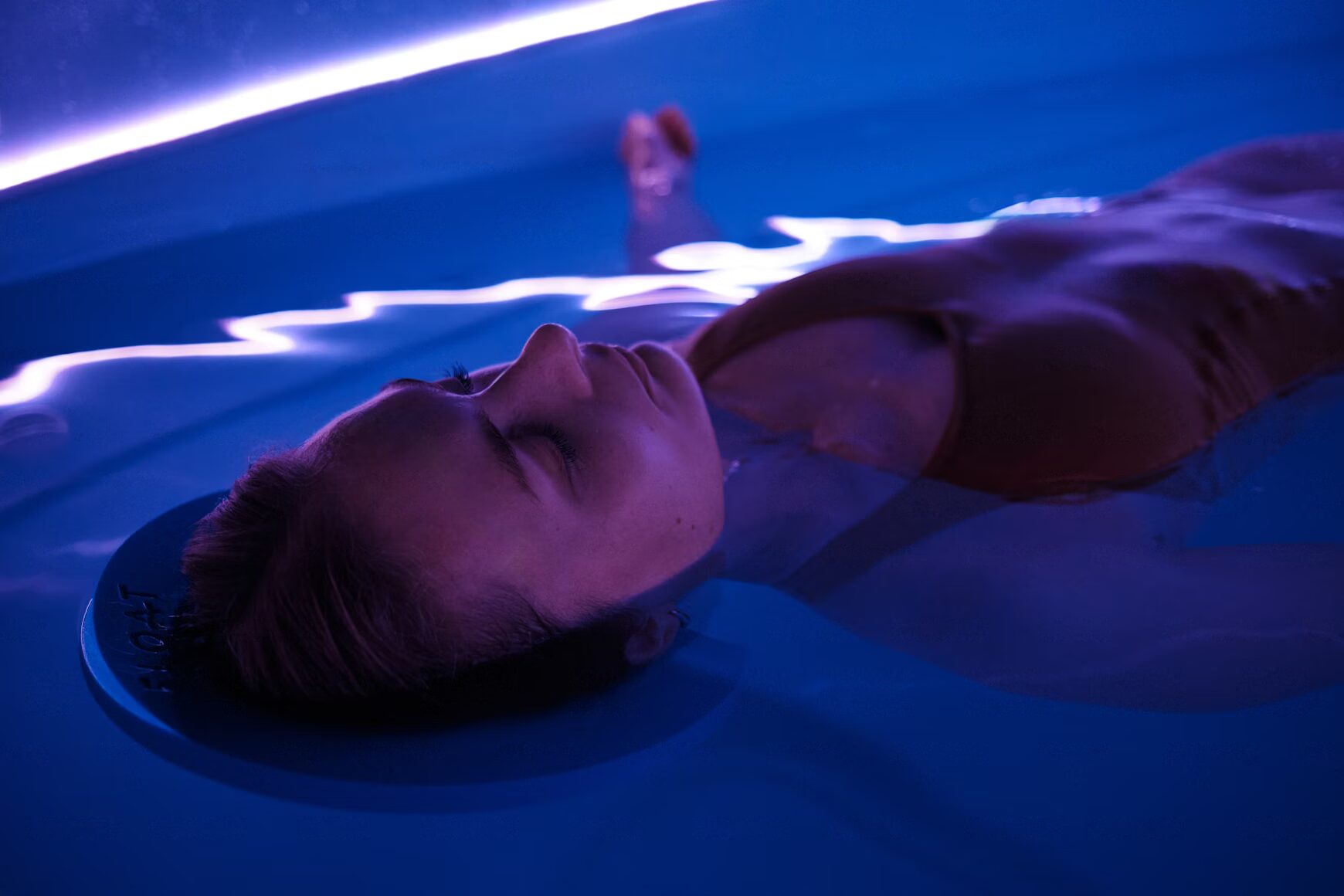
Think of floating like sleep or exercise — doing it once can feel great, but repetition is what creates lasting change. Each float reinforces a neurological pattern of safety, stillness, and reduced sensory load. Over time, your brain becomes better at accessing that state without effort, both inside and outside the tank.

This is why many long-term floaters notice that they settle in faster, experience deeper relaxation, and carry the effects with them longer after each session. Regular floating helps shorten the time it takes for your mind and body to downshift, making calm less of a rare event and more of a familiar state

Floating for Sleep, Stress, and Burnout

One of the most common long-term benefits of regular floating is improved sleep. Many people report falling asleep faster, sleeping more deeply, and waking up feeling more rested — even on nights they don’t float. Reduced sensory input and nervous-system regulation appear to help quiet the mental noise that often interferes with sleep.

For those dealing with chronic stress or burnout, floating offers a rare opportunity for true recovery. Unlike distractions that temporarily mask stress, floating removes stimulation entirely, allowing the body to reset at a physiological level. Over time, this can lead to improved emotional resilience, clearer thinking, reduced overwhelm, and a greater sense of balance in daily life.

Transdermal Magnesium

Magnesium plays a critical role in how the body manages stress, muscle tension, and recovery, and it’s one of the most common mineral deficiencies in modern life. It’s involved in over 300 enzymatic reactions, including those that regulate muscle contraction, nerve signaling, heart rhythm, and sleep cycles. The water in our float tanks is saturated with pharmaceutical-grade Epsom salt (magnesium sulfate), creating an environment where the body can fully relax while being immersed in a magnesium-rich solution. Many people report feeling looser, calmer, and more physically at ease after floating, particularly in areas prone to chronic tension like the neck, shoulders, and lower back.

While scientific research on transdermal magnesium absorption is still ongoing, multiple studies suggest that warm water immersion combined with magnesium sulfate may support muscle relaxation and nervous system recovery. Beyond absorption, magnesium’s effects are also indirect — by reducing sensory input and calming the nervous system, floating helps lower stress hormones that deplete magnesium stores in the body. Over time, regular floating may help support better sleep quality, reduced muscle soreness, fewer stress-related symptoms, and a more balanced baseline state. In this way, magnesium-rich floating works synergistically with deep relaxation, making each session not just a mental reset, but a full-body recovery experience.

Science behind it

Floating has been studied for decades under the name flotation-REST (Restricted Environmental Stimulation Therapy). Research has shown that repeated float sessions can significantly reduce stress hormones like cortisol, lower blood pressure, and improve mood and emotional regulation. Participants in multiple studies have also reported improvements in sleep quality, reductions in anxiety and depressive symptoms, and decreased muscle tension and pain.

More recent research suggests floating may help regulate the autonomic nervous system — the system responsible for shifting between fight-or-flight and rest-and-repair. With regular exposure to a low-stimulation environment, the nervous system appears to become more flexible, making it easier to return to a calm baseline even in everyday life. In short, floating doesn’t just help you relax — it helps your body remember how to relax.

The link below will take you to the National Library Of Medicine’s research on Floatation Therapy where you can read it all for yourself! 

Blog Posts

Float Boston’s Blog is slowly coming back and will be better than ever by 2026. Check back often for more!

our special offer

First Float Deals

Ready to dive in? We have 2 first float offers, a single float 60 minute float for $50 and a 3 pack for $150. The first float is only available if you’re a new customer at Float Boston, and the 3 pack can be used one time per client and can be purchased at any time. See you soon!